Richard Reed Childress
Class of 2026
- CEO Richard Childress Racing
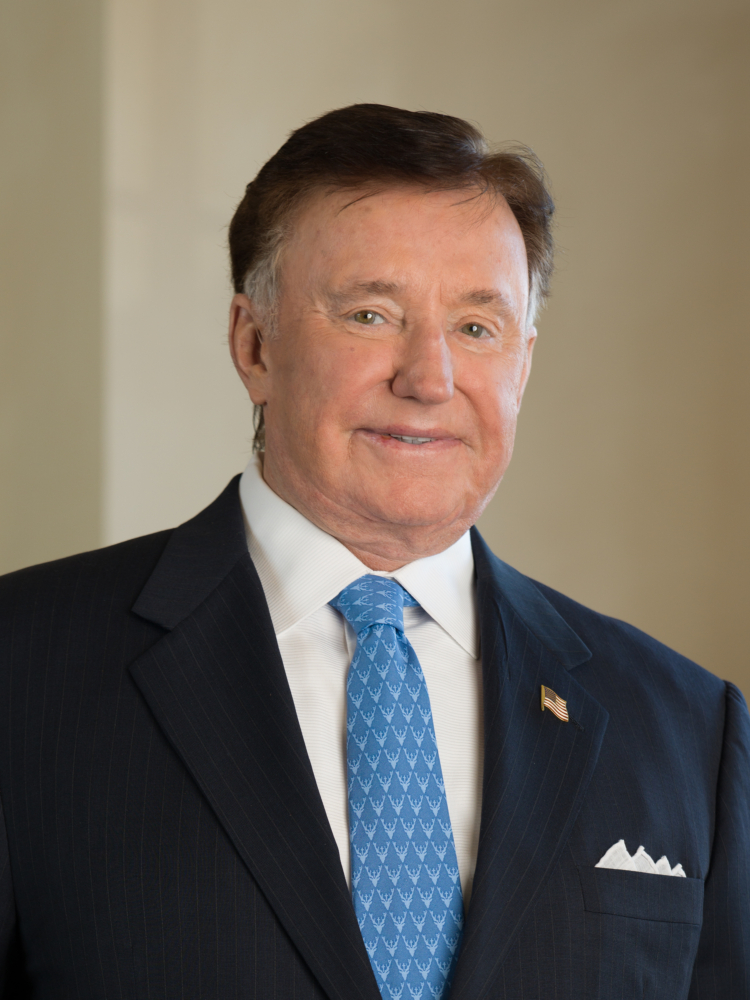
Life’s about following your dream. You may have to make sacrifices, but if you dream in America, you will succeed.
Childress was used to working to help put food on the table. When he was in second grade, he swept floors and wiped down tables to buy lunch for himself and his sister. He took whatever job he could find, including working in tobacco fields and gas stations. Despite his hardships, Childress says his family was lucky. “We always had food and housing, but most important, we loved each other.”
Bowman Grey Stadium, which included a racecar track, was five miles from his home. Childress walked there on weekends and got a job selling peanuts and popcorn. “I used to hang out with some of the drivers,” he says, “and I knew right away that being a racecar driver was all I ever wanted to be.”
When he was 18, Childress paid $20 for an old 1947 Plymouth that had been a taxicab and, with the help of a few friends, made it into a racecar. He worked side jobs and began racing wherever he could. In 1969, at the age of 24, he bought a wrecked Camaro, rebuilt it, and took it to Daytona. “This was my first big race,” Childress says. “With this car, I became Richard Childress Racing (RCR).”
In 1969, Childress got his first opportunity to compete in a NASCAR-sanctioned event when 16 drivers boycotted the race at Talladega Superspeedway. “Life is all about breaks,” Childress says. “I was invited to race that day, and when it was all over, I had $3,000 cash. It was more money than I’d ever seen in my life.”
Childress built a race shop on a small parcel of land he bought with his winnings. He worked two jobs so that he could continue to race. By 1971, he was earning enough at racing to quit his other jobs. At this point, he was married to his high school sweetheart and they had a daughter. After each race, Childress went to the Western Union office to send money home to his family. He was achieving his dream, but he had to drive to build his business. “I was on the road more than I was home,” he says. “I have few regrets in my life, but I regret all the time away from my daughter when she was growing up.”
In 1981, Childress decided it was time to end his driving career. “The next big break in my life came when I hired Dale Earnhardt to drive for me the last 10 races of the year. We didn’t win, but we put on a good show. Dale and I had a lot in common and we became good friends. For the next two years, I hired Ricky Rudd to drive for me.”
In 1984, Childress and Earnhardt teamed up once again, taking RCR from a once-scrappy operation into one of NASCAR’s most feared powerhouses. What began as a promising partnership quickly evolved into a dynasty, with Earnhardt’s fierce driving style and Childress’s steady leadership producing six championships and redefining what dominance looked like in the sport.
In 2001, tragedy struck when Dale Earnhardt crashed and died during the Daytona 500. His death was one of the most devastating moments of Childress’s life—personally and professionally. The team had been built around Earnhardt’s presence and leadership. His loss forced Childress to rethink everything—structure, direction, and identity. It marked the end of the era that had defined RCR’s rise. Childress became a strong supporter of NASCAR’s safety reforms. He believes that if anything good came from the tragedy, it was the sport’s transformation into a much safer environment.
Childress went on to expand RCR into a multicar, multiseries empire, shaping future stars and collecting titles long after Earnhardt’s era. Today, he has 400 team members supporting full-time operations in the NASCAR Cup Series and NASCAR O’Reilly Auto Parts Series. As a car owner, he was inducted into the NASCAR Hall of Fame in 2017, has earned more than 200 victories in NASCAR’s top three national series, 17 championships, three Daytona 500 championships, and three Brickyard 400 championships.
Although racing made him famous, Childress’s longterm wealth has come from being a savvy entrepreneur who used his NASCAR success to build a diversified business empire. His ventures range from vineyards to manufacturing to real estate to hospitality.
A hunter who enjoys the outdoors, Childress spent decades funding wildlife restoration, advocating for sportsmen’s conservation policy, and using his platform to protect habitats across the U.S. In 2025, he received the Dingell-Young Sportsmen’s Legacy Award, Congressional Sportsman’s Foundation’s highest honor, recognizing a lifetime of conservation leadership.
In 2008, the Childress Institute for Pediatric Trauma was founded by Richard and Judy Childress in partnership with Wake Forest Baptist Medical Center. Today, the Childress Institute for Pediatric Trauma has grown into a nationwide endeavor focused on research, education, and advocacy to help improve the care and treatment injured kids receive throughout America. “My work with the Institute is one of the most meaningful and far-reaching parts of my legacy” he says. “My wife and I were surprised when we learned that traumatic injury is the No. 1 killer of children in America. That fact pushed us to create an organization dedicated to saving injured kids’ lives.”
“I’ve always said that only in America could a kid with a $20 racecar and a dream that came from selling popcorn and peanuts be here today accepting the Horatio Alger Award. That $20 investment has paid off more than anyone could imagine.”
Childress has experienced many challenges in his life, but he has never yielded to them. “You have to face your challenges,” he says. “We all have difficult times, but it’s how you handle them that makes the difference.”
A strong believer in education, Childress regrets that he never completed high school. “I feel strongly about this organization and what it is doing to help young adults receive higher education. It’s important for the future of America. I’m very proud of this organization and its mission.”
Childress credits America for his ultimate success. “America’s all about freedom and that freedom creates multitudes of opportunities. Life’s about following your dream. You may have to make sacrifices, but if you dream in America, you will succeed.”